

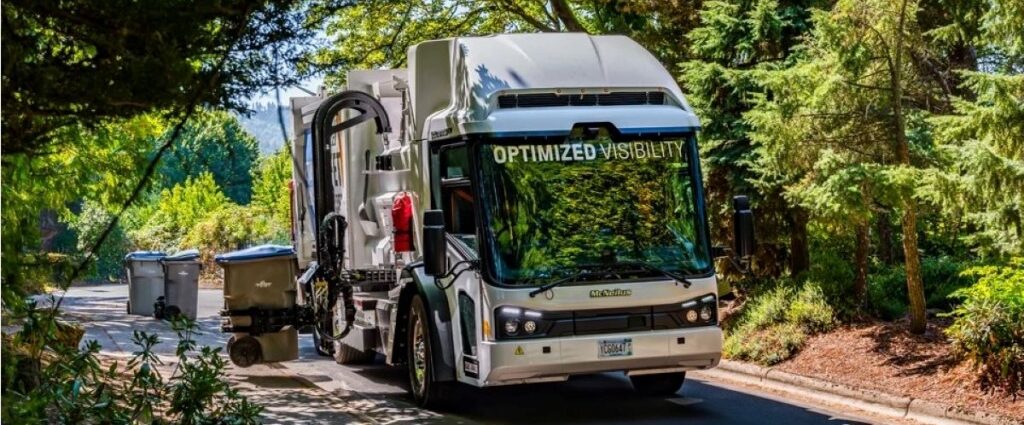
Managing a waste collection fleet requires careful planning, reliable equipment, and effective control of operating expenses. Fleet managers must ensure that vehicles are suitable for their routes, maintained according to established schedules, and available when collection services are required. McNeilus refuse trucks are designed for specialized waste and recycling collection applications, making it important for operators to understand their configurations, maintenance requirements, and long-term ownership costs. With the right information, businesses can make informed equipment decisions and develop more dependable fleet operations.
Understanding Different Refuse Truck Configurations
The first responsibility of a fleet manager is ensuring that each vehicle matches its intended application. Waste collection routes differ in terms of container types, road conditions, waste volumes, and daily stop counts.
McNeilus offers several categories of refuse trucks, including front loaders, rear loaders, and side loaders. Each configuration supports different collection methods.
Front loaders are commonly used for commercial dumpster collection. Rear loaders can accommodate various residential and light commercial applications, while side loaders are frequently used in collection systems based on compatible carts.
Fleet managers should compare the equipment’s capabilities with their actual operational requirements. Factors such as vehicle dimensions, body capacity, loading mechanisms, and access to customer properties can influence the suitability of a particular truck.
Selecting the Right McNeilus Rear Loader
Rear loaders are an important option for businesses that need flexibility across different collection environments. Their rear-loading arrangement supports collection methods that may not be practical for front-loading or automated side-loading vehicles.
A McNeilus rear loader can be considered for residential and light commercial routes, depending on its configuration and the collection requirements. Available model families include Standard, Heavy Duty, Extra Compaction, Tag Axle, Split Body, and M2 versions.
The Standard Rear Loader is designed for residential and light commercial applications. The Heavy Duty model provides increased compaction capability for demanding loads, while the Extra Compaction model is intended for operations that need additional compaction performance.
Tag axle and Split Body configurations address particular payload or separate-stream collection requirements. The M2 model serves certain lighter-weight applications.
Fleet managers should verify current specifications, available options, and chassis compatibility before selecting a model. They should also confirm that the vehicle’s rated capacity and configuration meet applicable operating requirements.
Evaluate Payload and Operating Capacity
Body volume is only one part of a truck’s practical capacity. The weight of the collected waste, chassis ratings, axle limits, and applicable road regulations also determine how much material a vehicle can legally carry.
A truck collecting lightweight household waste may use its body volume differently from one collecting dense commercial materials. Compaction can reduce waste volume, but it does not remove payload restrictions.
Managers should analyze the typical waste composition, collection frequency, and distance to disposal facilities when planning vehicle assignments.
Accurate capacity planning helps reduce unnecessary disposal trips while avoiding overloading. It also supports safer operations and more predictable route scheduling.
Establish a Preventive Maintenance Program
Preventive maintenance is essential for controlling repair expenses and supporting vehicle availability. Refuse trucks operate through repeated loading cycles, frequent stops, and exposure to demanding working conditions.
Fleet managers should establish inspection schedules for the chassis, brakes, tires, hydraulic systems, electrical equipment, refuse body, and loading mechanisms. Daily checks should identify visible damage, fluid leaks, warning indicators, and other concerns that require attention.
Maintenance intervals should follow the applicable manufacturer’s recommendations and account for actual operating conditions. Managers should also ensure that drivers understand how to report developing problems.
Accurate service records help identify recurring faults, organize repairs, and estimate future maintenance expenses. They also provide useful information when evaluating whether an older truck remains economical to operate.
Manage Replacement Parts and Inventory
Parts availability can directly affect fleet uptime. When a critical component is unavailable, a vehicle may remain out of service even when the repair itself is relatively straightforward.
Fleet managers should identify frequently needed components and review supplier lead times before deciding what to keep in inventory. Stocking every possible part may be expensive, so inventory decisions should reflect historical usage, vehicle configurations, and the consequences of downtime.
When sourcing McNeilus rear loader components, businesses should provide accurate vehicle identification details and confirm compatibility before placing an order.
Managers should also compare part availability, warranty conditions, technical assistance, and delivery expectations. Keeping records of replacement components helps track maintenance costs and identify recurring failures.
Understand the Role of Ten-8 Industrial
Ten-8 Industrial is part of the McNeilus independent dealership network. Its listed services include refuse truck sales, maintenance, repairs, and parts support for customers across Alabama, Florida, Georgia, and Mississippi.
Fleet managers in its service region can investigate Ten-8 Industrial when evaluating equipment purchases or planning maintenance support. Its service information also identifies capabilities involving refuse body diagnostics, hydraulic systems, automated arms, compactors, and preventive maintenance.
Before arranging work, businesses should confirm current service coverage, availability, and support for their specific truck model. Service response times, parts delivery, warranty terms, and technical expertise are all relevant when evaluating a supplier.
Establishing clear communication with a service provider can help managers plan repairs, obtain appropriate components, and coordinate vehicle availability.
Monitor Fleet Performance and Operating Costs
A fleet manager should understand how each truck performs over time. Useful measurements include fuel consumption, maintenance spending, downtime, completed collection stops, vehicle utilization, and repair frequency.
Reviewing these indicators helps identify operational problems and opportunities for improvement. A truck with repeated breakdowns may require a detailed assessment, while unusually high fuel consumption may justify checking vehicle condition and route efficiency.
The total cost of ownership should include purchase expenses, fuel, labor, insurance, scheduled maintenance, unexpected repairs, replacement parts, and downtime.
These calculations are particularly useful when deciding whether to repair an older truck or replace it with a different configuration. Decisions based on actual operating data are more reliable than decisions based only on purchase price or vehicle age.
Plan Routes and Train Operators
Even a suitable truck cannot achieve its full potential without effective route planning and trained operators.
Managers should organize routes according to customer locations, traffic patterns, disposal facility access, and the capabilities of the assigned vehicles. Reviewing route performance can help identify unnecessary mileage and repeated delays.
Driver training should cover vehicle inspections, loading procedures, reversing, safe operation, and the correct response to warning indicators. Employees should understand the limitations of their equipment and follow established safety procedures.
Regular communication between drivers, maintenance staff, and fleet managers helps identify problems early and keeps operational decisions grounded in practical experience.
Assess Used Trucks Carefully
Used refuse trucks can provide an alternative for businesses that need to control initial investment costs. However, the purchase decision should include a thorough inspection and review of maintenance history.
Buyers should assess the chassis, body structure, hydraulic systems, loading mechanisms, compaction equipment, and electrical components. They should also check for recurring faults, visible damage, and evidence of inadequate maintenance.
The availability of compatible parts and technical support should be considered before purchasing an older model. A lower purchase price may not represent good value if the vehicle requires extensive repairs or cannot meet the intended workload.
Conclusion
Fleet managers need to evaluate truck configurations, payload requirements, maintenance schedules, parts availability, and total ownership costs when managing McNeilus refuse trucks. Each vehicle should be matched to its intended collection routes and maintained according to the applicable service requirements.
Planning for compatible replacement components, monitoring performance data, and training operators can improve fleet reliability. Businesses can also investigate support options from Ten-8 Industrial where its services are available.
A structured approach to purchasing, maintenance, and fleet management helps waste collection companies make informed decisions, control operating expenses, and provide dependable services to the communities and businesses they serve.
Comments are closed, but trackbacks and pingbacks are open.